
Contact
Contact
Visualising under non-disclosure: what do you show and what don't you?

By
By
By
Ton Kuper
Ton Kuper
Ton Kuper
Founder & managing director
Founder & managing director
Founder & managing director


Short answer: By separating what the viewer needs to understand from what they are allowed to see. A visualisation can demonstrate what problem a system solves and how it works, without showing the actual specifications: using a generalised model, a fictional environment, or a deliberately chosen level of detail. What becomes visible is agreed upon before production begins.
A buyer, an innovation committee, or a programme manager needs to understand what they are purchasing or funding. The details that provide that understanding are often the exact details that cannot be disclosed. A data sheet shows the technology, but not the problem that technology solves. A video of the actual system is rarely an option. What remains is an explanation that goes far enough to convince and stops at just the right point.
This article shows how to determine that boundary and how to still build a clear narrative within it.
What are you allowed to show, and who decides?
As the client, you determine which information you share externally through a visualisation. The visualisation agency provides input on this, but the responsibility rests with you. That is why it is important to determine in advance, together with your security or export control department, which information may and may not be shown.
A practical approach is to divide the information into three categories. Public information includes everything that is already shared in brochures, on the website, or during trade fairs. Restricted information is intended for a specific target audience, such as a delegation or tender committee, and may only be shared with this group. Finally, there is information that may not be shown. Consider technical details or other sensitive data that must not be visible in any version of the visualisation.
By incorporating this classification into the development process from the outset, the visualisation can easily be adapted to the purpose and the target audience. For instance, you can use a general version for a trade fair and a more detailed version for a closed presentation. The narrative remains the same, but the level of detail differs per application. This prevents unnecessary duplication of work while simultaneously helping to protect sensitive information.
Furthermore, for technically sensitive projects, it is customary to formalise confidentiality arrangements in a non-disclosure agreement (NDA). C4Real enters into these at the client's request.

How do you reveal something without exposing it?
When visualising complex or sensitive technology, it is important to choose an approach that clarifies the operation and added value of a system without disclosing confidential information. The way a technology is presented depends on what is allowed to be shown, the core message, and the technical knowledge of the target audience.
When the actual system cannot be shown, a generalised or fictional model can offer a solution. For example, for Toray Advanced Composites, we developed a completely anonymised Formula 1 team with an accompanying vehicle. Although no client logos or recognisable elements were used, the underlying technology could still be convincingly demonstrated. By using a different sector as a starting point, it became possible to provide insight into the same technical challenge without exposing the original system.
Another approach is to visualise not the technology itself, but primarily its effect. This is particularly suitable when the impact of a system is more important than its precise implementation. For TenCate ABDS, for example, the focus was on the consequences of a roadside bomb on a vehicle, illustrating the situation both with and without the system. This made the protective effect clear without using actual video footage or sensitive operational information.
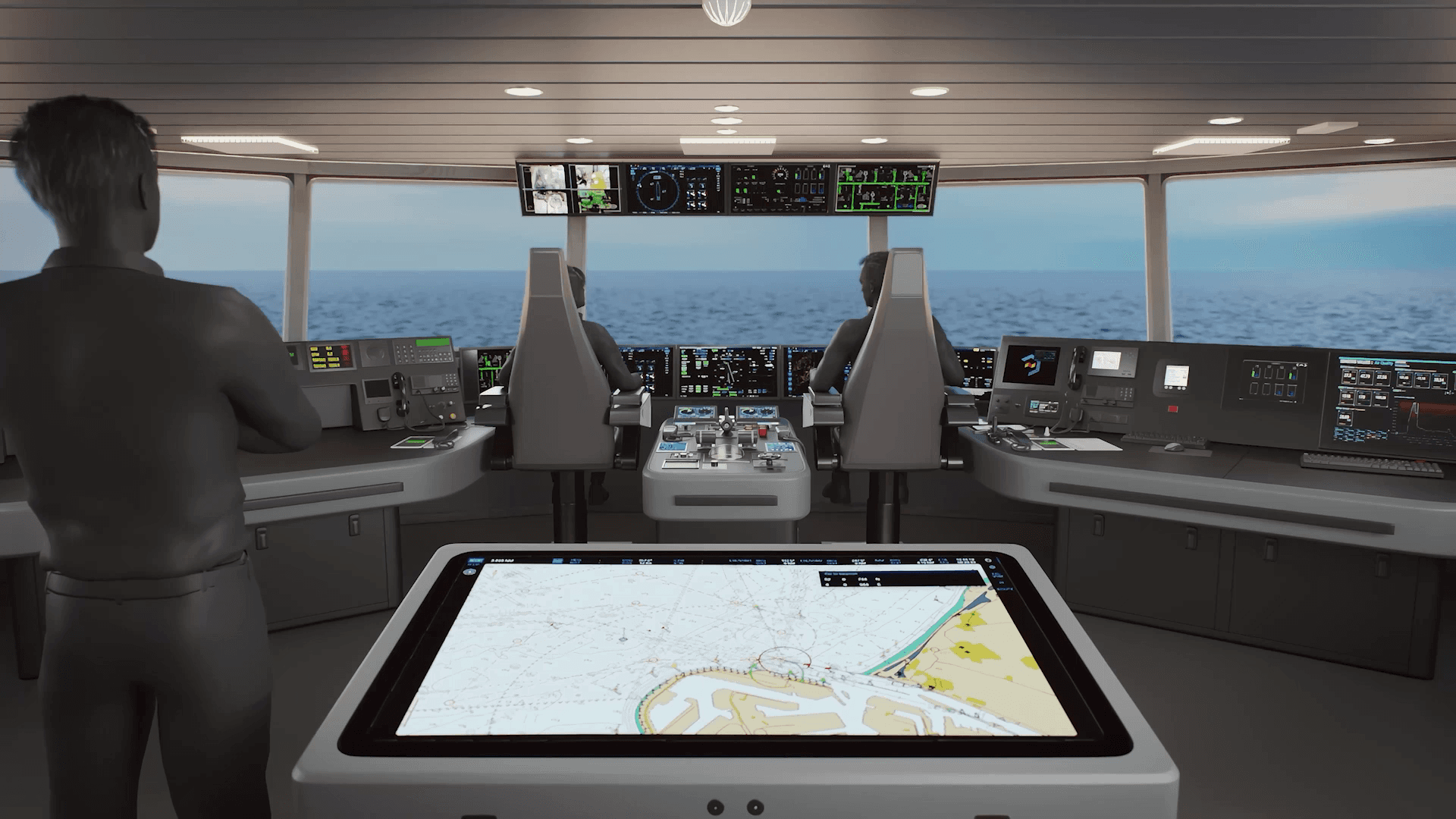
Sometimes the greatest added value lies precisely in components that are not visible from the outside. In that case, a visualisation can take the viewer inside a system. For RH Marine, for instance, a 3D model of a naval vessel was developed in which the viewer could zoom in and explore the internal structure. This made the protective materials and their position within the whole visible. The visualisation thus demonstrated how the technology contributes to the protection of the ship, without this being apparent from the outside.
In addition to deciding what to show, the knowledge level of the target audience also plays an important role. A visualisation that works well for a general audience may be too simplistic for specialised professionals. Experts recognise when complex technology is oversimplified, which reduces the credibility of the presentation. When visualising the radar technology of Thales , the knowledge level of international navy procurement officers was therefore taken into account. The animation offered sufficient technical depth to inform this target group seriously, without unnecessary oversimplifications.
The most important lesson is that an effective technical visualisation does not begin with the question of what a system looks like exactly, but with the question of what the viewer needs to understand. Sometimes that requires a fictional model, sometimes making effects or internal structures visible, and sometimes a high level of technical detail. By aligning the visualisation strategy with the sensitivity of the technology, the communication objective, and the target audience, complex information is conveyed comprehensibly and credibly.
How does a project proceed when details are confidential?
The process begins with an in-depth intake and analysis, in which we delve into the workings of the technology. Where necessary, this is done under an NDA. In order to visualise a system accurately and convincingly, we need to understand the technology down to the smallest details, including the components that will ultimately not be shown. Only with that in-depth knowledge can we determine how best to clarify the technology.
Next, together with the client, we define what information may be shared publicly, what information remains confidential, and which components may under no circumstances be visible. These agreements form the starting point for further development and ensure that the visualisation is substantively accurate and respects the sensitivity of the technology.
Based on this, we develop the concept into a script, storyboard, and style frames. This gives the client a clear picture of the intended visualisation in advance, before production even begins. In this phase, there is room for input and adjustments, allowing the concept to be presented internally and tested against the wishes and requirements of various stakeholders. Only once the concept has been adequately aligned do we start production.
During production, we work in several stages and provide feedback rounds in which the client can assess progress. This keeps the process transparent and allows us to make timely adjustments where necessary. This ensures that both the technical content and the visual execution meet expectations.
Finally, we tailor the delivery to the various communication channels and applications. From a single 3D model, we can develop a wide variety of assets, from still images and short animations to presentations and exhibition materials. For Thales SOTAS, for example, we built a single model library from which we developed visuals, shorter animations, and a complete sales kit for global sales departments. Thus, a single, meticulously built technical foundation serves as the starting point for a consistent and versatile communication output.
What are you allowed to show, and who decides?
As the client, you determine which information you share externally through a visualisation. The visualisation agency provides input on this, but the responsibility rests with you. That is why it is important to determine in advance, together with your security or export control department, which information may and may not be shown.
A practical approach is to divide the information into three categories. Public information includes everything that is already shared in brochures, on the website, or during trade fairs. Restricted information is intended for a specific target audience, such as a delegation or tender committee, and may only be shared with this group. Finally, there is information that may not be shown. Consider technical details or other sensitive data that must not be visible in any version of the visualisation.
By incorporating this classification into the development process from the outset, the visualisation can easily be adapted to the purpose and the target audience. For instance, you can use a general version for a trade fair and a more detailed version for a closed presentation. The narrative remains the same, but the level of detail differs per application. This prevents unnecessary duplication of work while simultaneously helping to protect sensitive information.
Furthermore, for technically sensitive projects, it is customary to formalise confidentiality arrangements in a non-disclosure agreement (NDA). C4Real enters into these at the client's request.
How do you reveal something without exposing it?
When visualising complex or sensitive technology, it is important to choose an approach that clarifies the operation and added value of a system without disclosing confidential information. The way a technology is presented depends on what is allowed to be shown, the core message, and the technical knowledge of the target audience.
When the actual system cannot be shown, a generalised or fictional model can offer a solution. For example, for Toray Advanced Composites, we developed a completely anonymised Formula 1 team with an accompanying vehicle. Although no client logos or recognisable elements were used, the underlying technology could still be convincingly demonstrated. By using a different sector as a starting point, it became possible to provide insight into the same technical challenge without exposing the original system.
Another approach is to visualise not the technology itself, but primarily its effect. This is particularly suitable when the impact of a system is more important than its precise implementation. For TenCate ABDS, for example, the focus was on the consequences of a roadside bomb on a vehicle, illustrating the situation both with and without the system. This made the protective effect clear without using actual video footage or sensitive operational information.
Sometimes the greatest added value lies precisely in components that are not visible from the outside. In that case, a visualisation can take the viewer inside a system. For RH Marine, for instance, a 3D model of a naval vessel was developed in which the viewer could zoom in and explore the internal structure. This made the protective materials and their position within the whole visible. The visualisation thus demonstrated how the technology contributes to the protection of the ship, without this being apparent from the outside.
In addition to deciding what to show, the knowledge level of the target audience also plays an important role. A visualisation that works well for a general audience may be too simplistic for specialised professionals. Experts recognise when complex technology is oversimplified, which reduces the credibility of the presentation. When visualising the radar technology of Thales , the knowledge level of international navy procurement officers was therefore taken into account. The animation offered sufficient technical depth to inform this target group seriously, without unnecessary oversimplifications.
The most important lesson is that an effective technical visualisation does not begin with the question of what a system looks like exactly, but with the question of what the viewer needs to understand. Sometimes that requires a fictional model, sometimes making effects or internal structures visible, and sometimes a high level of technical detail. By aligning the visualisation strategy with the sensitivity of the technology, the communication objective, and the target audience, complex information is conveyed comprehensibly and credibly.
How does a project proceed when details are confidential?
The process begins with an in-depth intake and analysis, in which we delve into the workings of the technology. Where necessary, this is done under an NDA. In order to visualise a system accurately and convincingly, we need to understand the technology down to the smallest details, including the components that will ultimately not be shown. Only with that in-depth knowledge can we determine how best to clarify the technology.
Next, together with the client, we define what information may be shared publicly, what information remains confidential, and which components may under no circumstances be visible. These agreements form the starting point for further development and ensure that the visualisation is substantively accurate and respects the sensitivity of the technology.
Based on this, we develop the concept into a script, storyboard, and style frames. This gives the client a clear picture of the intended visualisation in advance, before production even begins. In this phase, there is room for input and adjustments, allowing the concept to be presented internally and tested against the wishes and requirements of various stakeholders. Only once the concept has been adequately aligned do we start production.
During production, we work in several stages and provide feedback rounds in which the client can assess progress. This keeps the process transparent and allows us to make timely adjustments where necessary. This ensures that both the technical content and the visual execution meet expectations.
Finally, we tailor the delivery to the various communication channels and applications. From a single 3D model, we can develop a wide variety of assets, from still images and short animations to presentations and exhibition materials. For Thales SOTAS, for example, we built a single model library from which we developed visuals, shorter animations, and a complete sales kit for global sales departments. Thus, a single, meticulously built technical foundation serves as the starting point for a consistent and versatile communication output.
Case study in the spotlight
TenCate ABDS without real footage
The challenge. TenCate Advanced Armour developed a system against roadside bombs. Its operation is difficult to communicate without portraying it clearly, and without making it too confrontational.
The approach. C4Real developed a concept in which the effects of a roadside bomb on a vehicle are first visualised, followed by the same situation with the system. It became a 3D product animation without real film footage, complemented by an interactive 3D product explorer that shows where the products are applied on a military vehicle.
The result. The animation is widely used in sales presentations to defence delegations and at major defence trade fairs. It contributed to a major contract with the Pentagon. Jørgen Leif Svane, Director Advanced Sensors & Effectors at TenCate, says of it: "The customer gains insight into the problem and learns what the system does, without actually showing it, which would have been impossible."

Related blogs
Related blogs