C4Real - B2B Visual Communication Studio

Contact

Contact

What an immersive experience adds to your exhibition stand

How VR & AR make complex products tangible on the exhibition floor.

Ton Kuper

By

By

By

Ton Kuper

Ton Kuper

Ton Kuper

Founder & managing director

Founder & managing director

Founder & managing director

Ton Kuper on LinkedIn
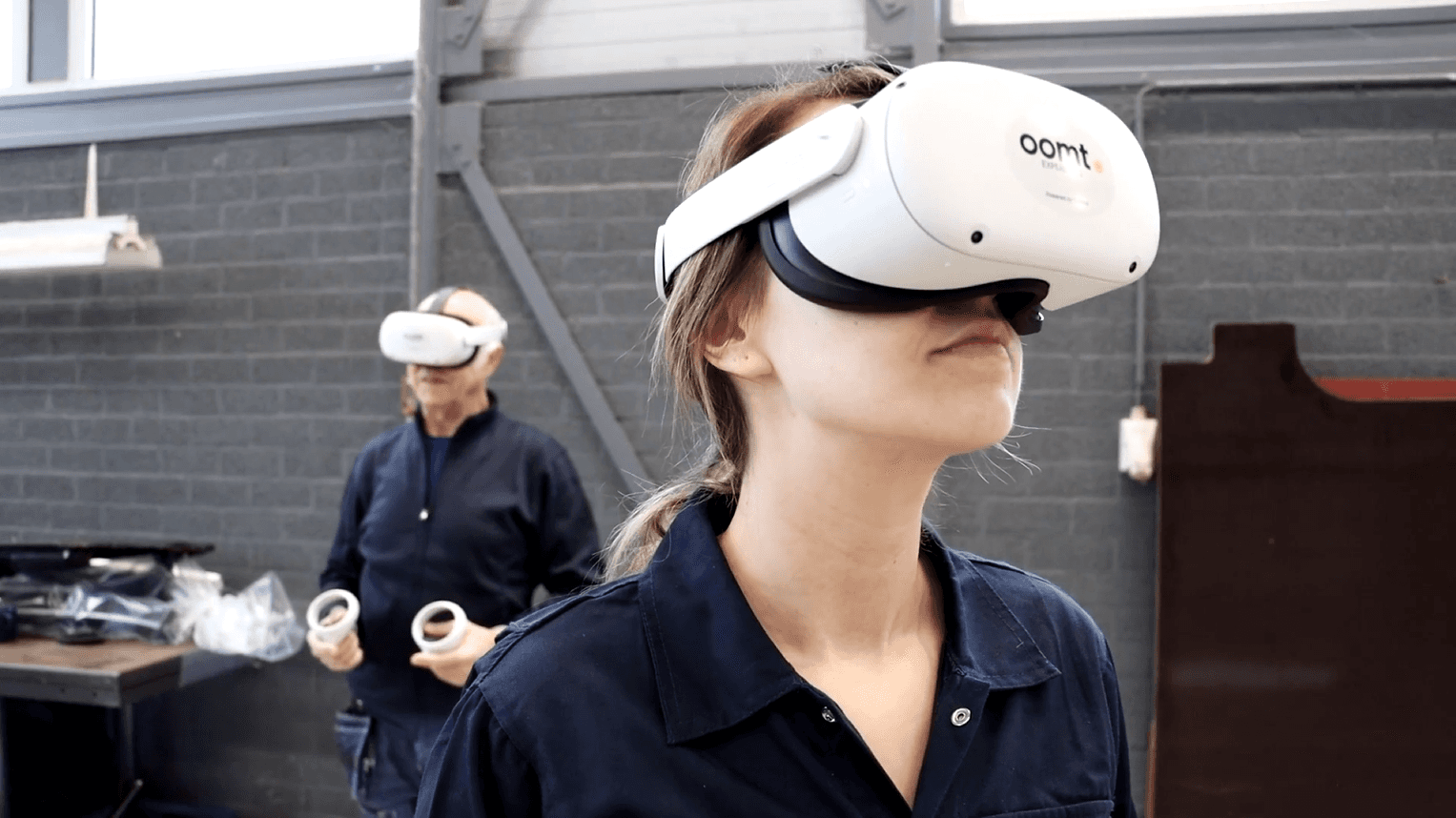
image VR glasses Use Case OOMT

TL;DR

Visitors walk past dozens of stands in a day. What they remember is rarely a brochure. It is the moment when they did something themselves: putting on glasses, seeing a full-size machine while it is actually three halls away. That is the core of an immersive experience: not looking at an explanation, but standing right in the middle of it.
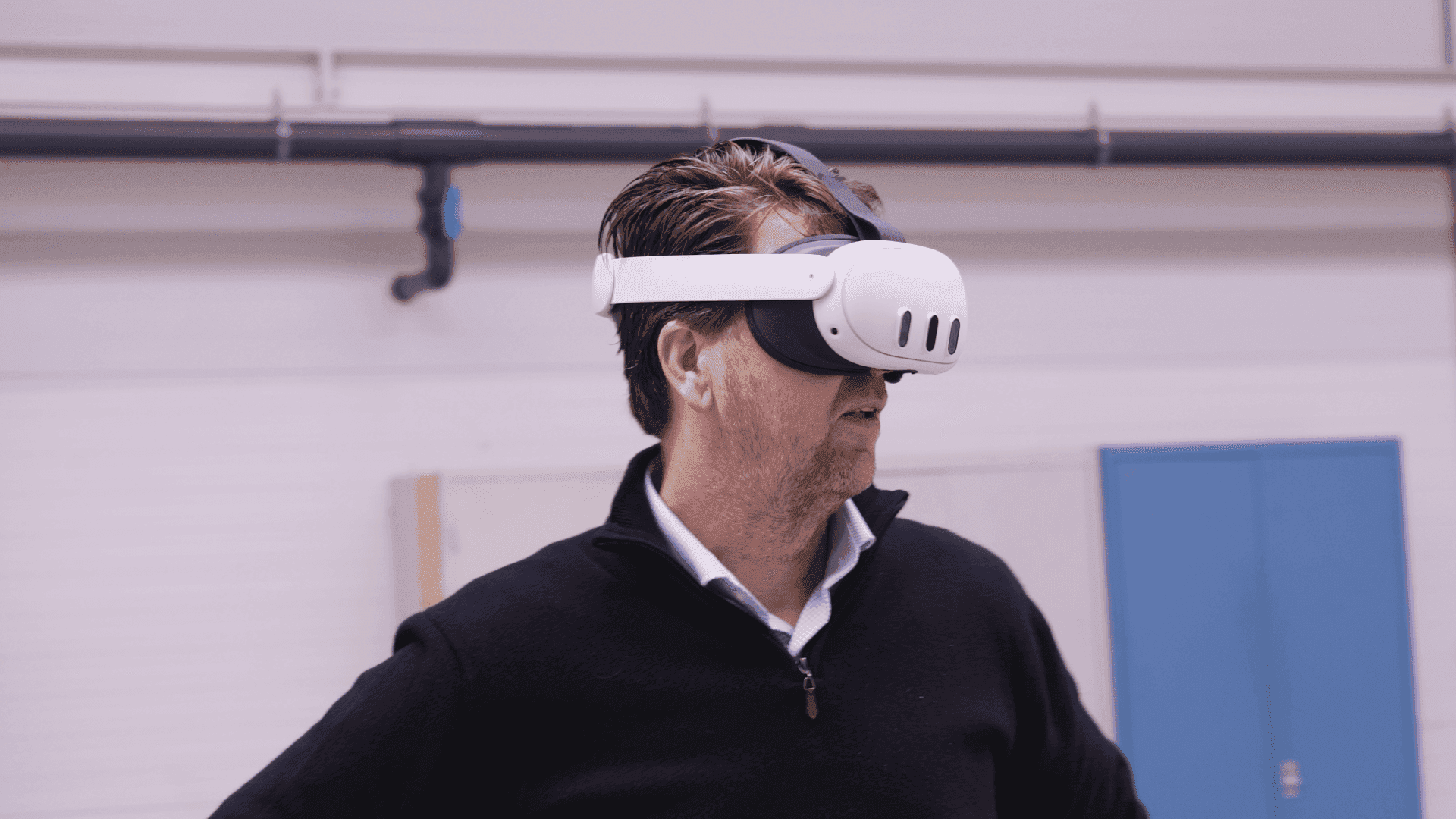
What does an immersive experience entail?

An immersive experience is content in which the visitor physically gets the feeling of being somewhere, or seeing something that is not actually there. This happens through two techniques: VR, a fully virtual environment in which the visitor looks around, and AR, digital content that is projected over the real world. Both differ from an interactive tool on a screen, such as a showroom or configurator, where the visitor does control the experience but remains a spectator on a flat image.


beeld VR bril Rollepaal gebruiker

How do VR and AR contribute to this?

The two techniques do not solve the same problem, and that difference determines which one suits your stand.

VR takes the visitor completely into another environment. Suitable when that environment itself is the point: a situation that does not yet exist, an impact that can only be understood on the spot, or a scale that does not come across on a screen. For Qirion, it was exactly that problem. The VR application with which stakeholders experience high-voltage pylons in a realistic 3D environment showed that the impact of a pylon on an environment could only really be understood once someone literally seemed to stand next to it.

AR keeps the visitor in the real space and adds something to it. Suitable when the existing product or the existing situation remains the basis, but something needs to be added that cannot physically be present. Rollepaal used this for production lines that are too large to take to a client or an exhibition. With an AR application that allows clients to view life-sized 3D models of the machines, in full size or in miniature, the context (the client, the space, the conversation) remained intact, while the product was still there. Michan, Global Marketing Manager at Rollepaal: at clients' premises or on location, they can put on the glasses and view the production lines at full size, with a level of detail that shows the machines perfectly.

In short: choose VR if the environment is the story, choose AR if the product is the story and the environment is already there.


beeld gebruiker Vr experience Achmea

When it is and isn't worth the effort.

An immersive experience requires more preparation and guidance on the stand than a screen with a video. This pays off when the product or process itself is difficult to show (too large, too small, invisible, or not yet built) and when the target audience takes the time to look, such as at a trade fair with a technical audience. For a quick, superficial contact moment, a strong animation on a screen is often more effective: a lower barrier, faster to consume.


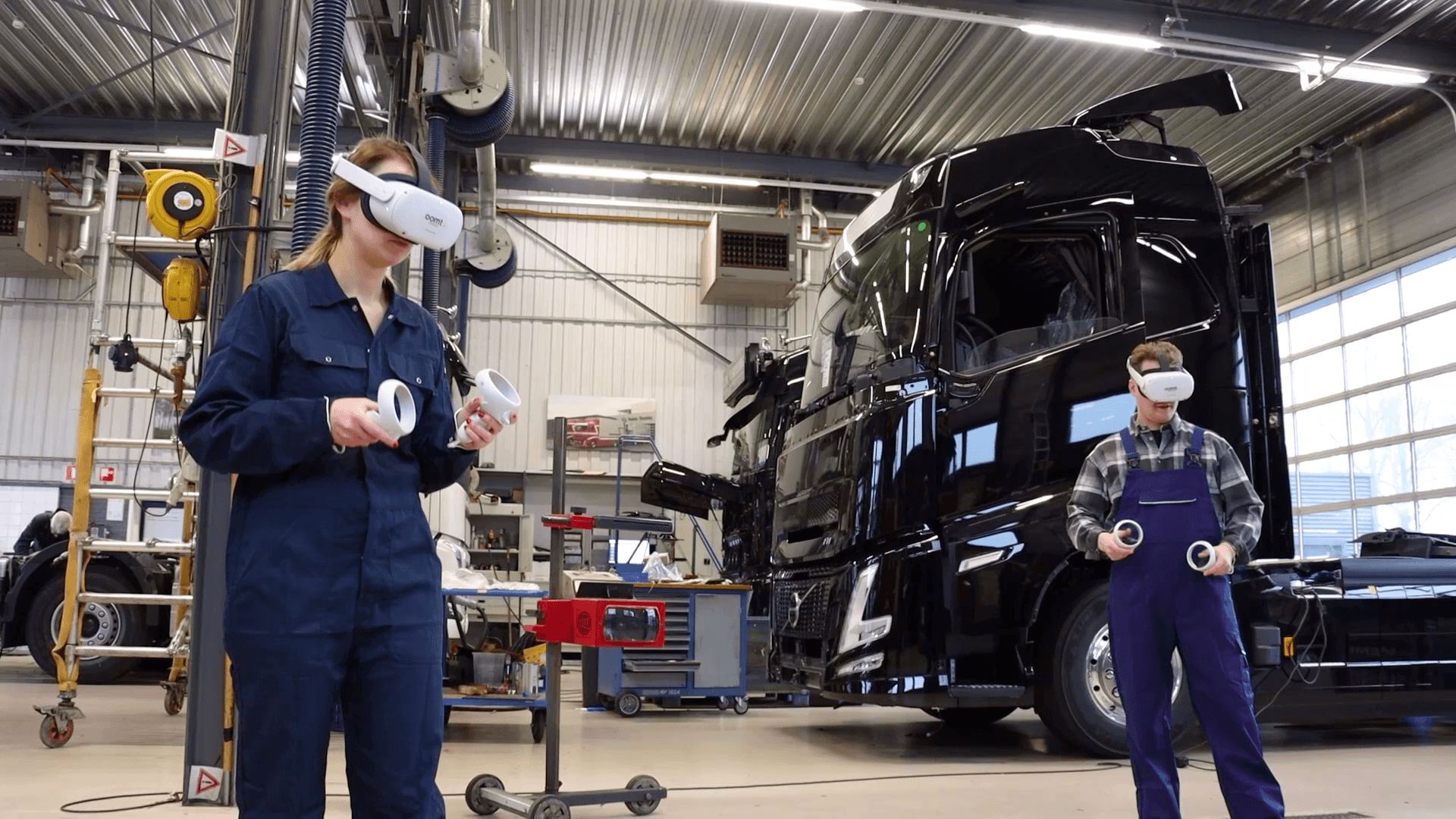
2 gebruikers met VR bril OOMT truck experience

How do you determine if it suits your stand?

The question is not whether immersive technology makes an impression, it almost always does, but whether your story needs that format. Does the visitor need to imagine an environment that does not yet exist? Then that points to VR. Do they need to understand a product that simply cannot be present? Then that points to AR. Is the problem mainly that they need to quickly understand what you do? Then a shorter, linear format is often stronger than both.


What does an immersive experience entail?

An immersive experience is content in which the visitor physically gets the feeling of being somewhere, or seeing something that is not actually there. This happens through two techniques: VR, a fully virtual environment in which the visitor looks around, and AR, digital content that is projected over the real world. Both differ from an interactive tool on a screen, such as a showroom or configurator, where the visitor does control the experience but remains a spectator on a flat image.


beeld VR bril Rollepaal gebruiker

How do VR and AR contribute to this?

The two techniques do not solve the same problem, and that difference determines which one suits your stand.

VR takes the visitor completely into another environment. Suitable when that environment itself is the point: a situation that does not yet exist, an impact that can only be understood on the spot, or a scale that does not come across on a screen. For Qirion, it was exactly that problem. The VR application with which stakeholders experience high-voltage pylons in a realistic 3D environment showed that the impact of a pylon on an environment could only really be understood once someone literally seemed to stand next to it.

AR keeps the visitor in the real space and adds something to it. Suitable when the existing product or the existing situation remains the basis, but something needs to be added that cannot physically be present. Rollepaal used this for production lines that are too large to take to a client or an exhibition. With an AR application that allows clients to view life-sized 3D models of the machines, in full size or in miniature, the context (the client, the space, the conversation) remained intact, while the product was still there. Michan, Global Marketing Manager at Rollepaal: at clients' premises or on location, they can put on the glasses and view the production lines at full size, with a level of detail that shows the machines perfectly.

In short: choose VR if the environment is the story, choose AR if the product is the story and the environment is already there.


beeld gebruiker Vr experience Achmea

When it is and isn't worth the effort.

An immersive experience requires more preparation and guidance on the stand than a screen with a video. This pays off when the product or process itself is difficult to show (too large, too small, invisible, or not yet built) and when the target audience takes the time to look, such as at a trade fair with a technical audience. For a quick, superficial contact moment, a strong animation on a screen is often more effective: a lower barrier, faster to consume.


2 gebruikers met VR bril OOMT truck experience

How do you determine if it suits your stand?

The question is not whether immersive technology makes an impression, it almost always does, but whether your story needs that format. Does the visitor need to imagine an environment that does not yet exist? Then that points to VR. Do they need to understand a product that simply cannot be present? Then that points to AR. Is the problem mainly that they need to quickly understand what you do? Then a shorter, linear format is often stronger than both.


Case study in the spotlight

VR to communicate high-voltage grid - Qirion

In infrastructure projects, stakeholder management is a major challenge. How do you make the impact on the surrounding area clear? How do you ensure understanding and support among stakeholders?

Together with Qirion , we developed an innovative VR application that addresses this issue. With this solution, stakeholders can experience the newest high-voltage pylons in a realistic 3D environment – as if they are already standing there.

Qirion Case Study

Related blogs

Related blogs

Be further inspired!

Be further inspired!