
Contact
Contact
Augmented reality for machine builders
How do you present a production line that doesn't fit in the showroom?

By
By
By
Ton Kuper
Ton Kuper
Ton Kuper
Founder & managing director
Founder & managing director
Founder & managing director

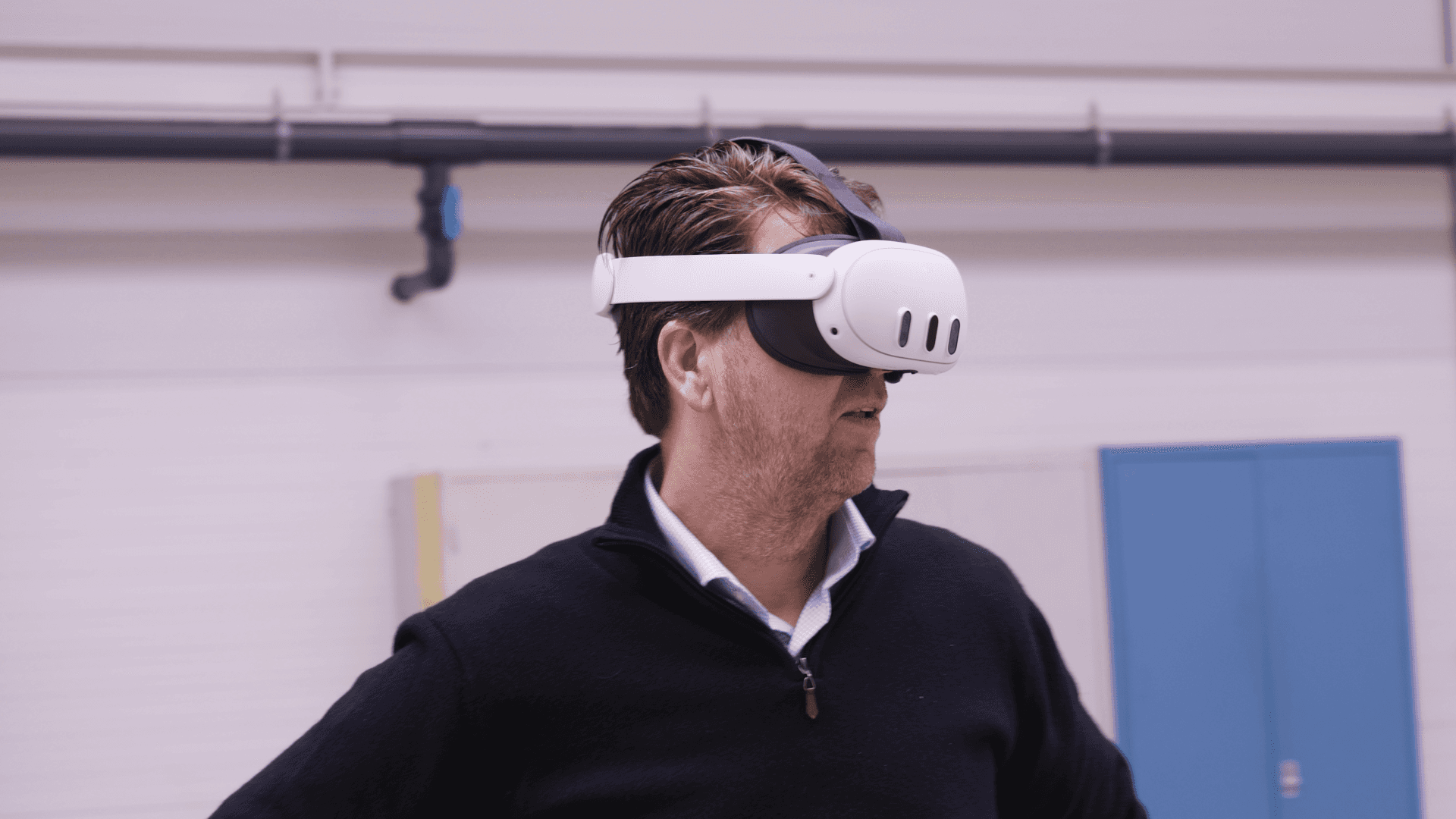
Short answer: With augmented reality, you project a 3D model of the machine into the customer's space, either full-scale or as a miniature. The customer sees the scale, layout and distinctive features without the machine needing to be moved. It works for machines that are too large, too complex or too difficult to transport to display physically.
An extrusion line is tens of metres long and several metres high. It is not displayed at a trade fair, it does not fit into a showroom, and you cannot take it along to a customer visit. Brochures and videos show what the machine looks like, but not how it would fit into the customer's factory. That is the question a buyer bases their decision on.
This article describes how augmented reality solves that problem, when it is worthwhile, and what is needed to get started.
What augmented reality can do that a film or brochure cannot
Rollepaal builds pipe extrusion machines and production lines. Due to their scale, Rollepaal could not physically present these lines—not at a trade fair, not during a sales meeting, and not on-site with a client. There was no tangible way to demonstrate scale and functionality.
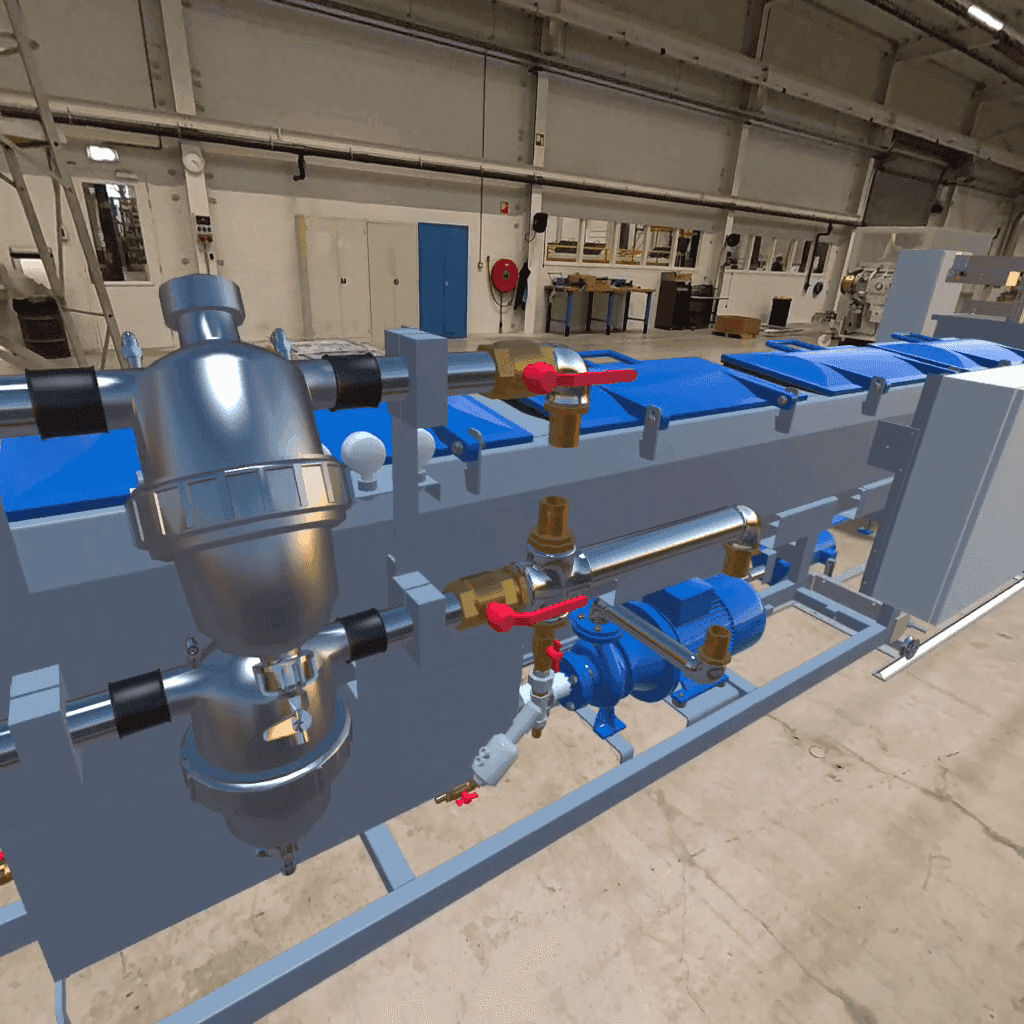
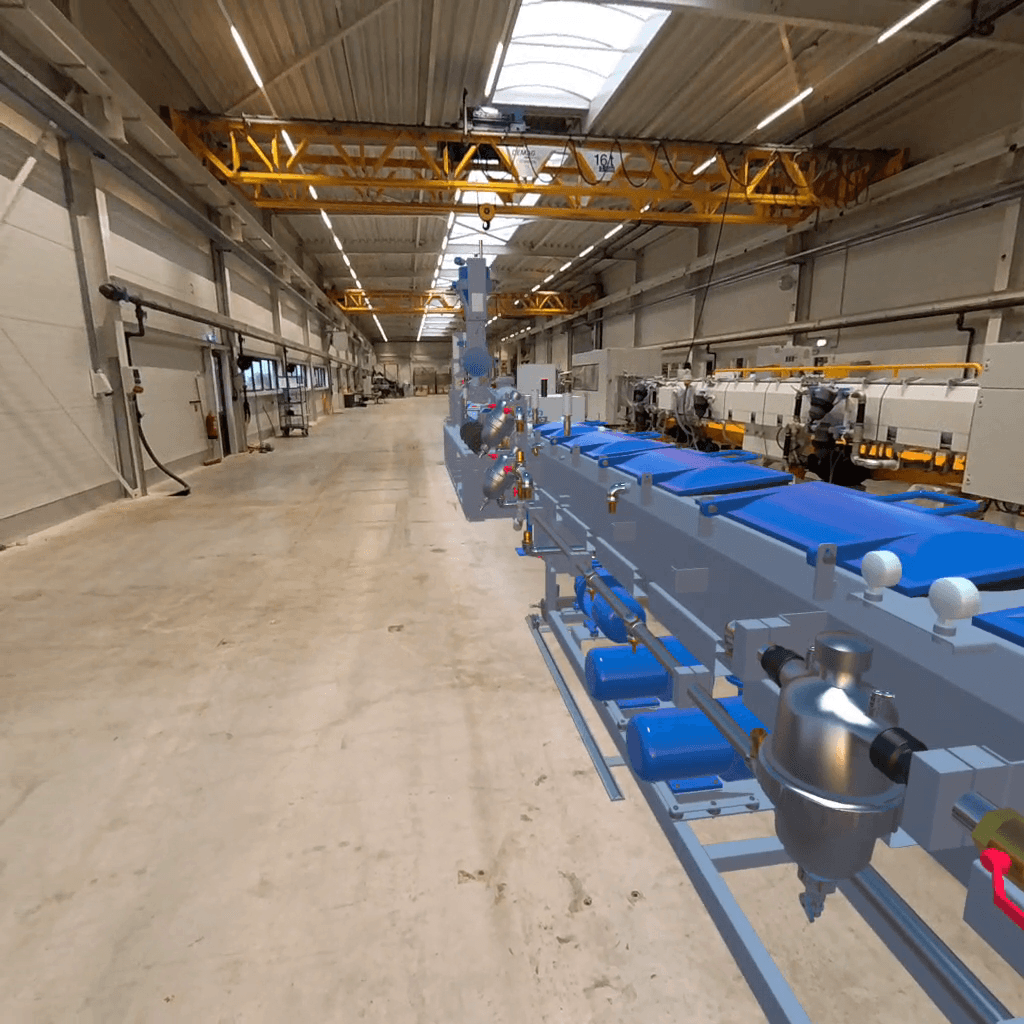
C4Real developed an AR application that allows production lines to be displayed digitally and lifelike, anywhere in the world. The client views realistic 3D models of the machines at full scale or in miniature, depending on the available space. The key selling points of each machine are incorporated into the application, ensuring the presentation is also substantively convincing.
Clients can project the machine into their own production environment and immediately assess whether it fits and what adjustments are required. This accelerates decision-making and saves time. Michan Katerbarg, Global Marketing Manager at Rollepaal, says: "The level of detail is such that you see the machines perfectly."
Furthermore, the 3D models remain reusable for other media. Rollepaal can utilise them for animations and explainer videos, including for online channels and social media.
When does augmented reality pay off for a machine builder?
AR pays off when three factors converge. The product is too large, too heavy, or too complex to showcase on-site with the client. The client needs to assess whether it fits into their own environment. And the conversation takes place across various locations: trade fairs, client visits, and events.
It does not solely have to be about dimensions. For TenCate, we developed an AR and mixed reality experience around a Formula 1 car, in which virtual layers reveal how the materials are constructed and what they achieve: safety, durability, and lightweight construction. There, AR revolves around making visible what cannot be seen from the outside.
If your product is small, easy to transport, and quickly explained, then AR is not the primary choice. A 3D animation or a product explorer reaches a wider audience with less preparation.
What determines whether augmented reality development is worthwhile for your machine?
Picture a buyer who has to decide on a new production line. What are their uncertainties? Does the line fit into their factory floor, which variant should they choose, or do they not yet fully grasp the process flow? That is the first question you answer, because the answer dictates what the application needs to show. At Rollepaal, it was about scale and integration: clients wanted to see whether a line fits within their own production environment.
Next, you look at what you already have. What 3D data of your machines currently exists? Its scope and quality determine how much work remains, and we factor that into the initial intake.
Then comes the setting where the conversation takes place. An exhibition stand demands something different from an office table or the client's factory hall, and that environment dictates how the experience is structured.
Finally, the selling points: which ones do you want to highlight for which machine? At Rollepaal, these are embedded in the application, ensuring that the sales representative and the client see the exact same explanation.
How does the development process work?
The process follows five stages: strategy, concept and design, development, implementation, and optimisation. In the concept phase, we first establish what the client sees and which arguments correspond to each machine. This is followed by the production of the application, implementation with the sales team, and finally optimisation.
What augmented reality can do that a film or brochure cannot
Rollepaal builds pipe extrusion machines and production lines. Due to their scale, Rollepaal could not physically present these lines—not at a trade fair, not during a sales meeting, and not on-site with a client. There was no tangible way to demonstrate scale and functionality.
C4Real developed an AR application that allows production lines to be displayed digitally and lifelike, anywhere in the world. The client views realistic 3D models of the machines at full scale or in miniature, depending on the available space. The key selling points of each machine are incorporated into the application, ensuring the presentation is also substantively convincing.
Clients can project the machine into their own production environment and immediately assess whether it fits and what adjustments are required. This accelerates decision-making and saves time. Michan Katerbarg, Global Marketing Manager at Rollepaal, says: "The level of detail is such that you see the machines perfectly."
Furthermore, the 3D models remain reusable for other media. Rollepaal can utilise them for animations and explainer videos, including for online channels and social media.
When does augmented reality pay off for a machine builder?
AR pays off when three factors converge. The product is too large, too heavy, or too complex to showcase on-site with the client. The client needs to assess whether it fits into their own environment. And the conversation takes place across various locations: trade fairs, client visits, and events.
It does not solely have to be about dimensions. For TenCate, we developed an AR and mixed reality experience around a Formula 1 car, in which virtual layers reveal how the materials are constructed and what they achieve: safety, durability, and lightweight construction. There, AR revolves around making visible what cannot be seen from the outside.
If your product is small, easy to transport, and quickly explained, then AR is not the primary choice. A 3D animation or a product explorer reaches a wider audience with less preparation.
What determines whether augmented reality development is worthwhile for your machine?
Picture a buyer who has to decide on a new production line. What are their uncertainties? Does the line fit into their factory floor, which variant should they choose, or do they not yet fully grasp the process flow? That is the first question you answer, because the answer dictates what the application needs to show. At Rollepaal, it was about scale and integration: clients wanted to see whether a line fits within their own production environment.
Next, you look at what you already have. What 3D data of your machines currently exists? Its scope and quality determine how much work remains, and we factor that into the initial intake.
Then comes the setting where the conversation takes place. An exhibition stand demands something different from an office table or the client's factory hall, and that environment dictates how the experience is structured.
Finally, the selling points: which ones do you want to highlight for which machine? At Rollepaal, these are embedded in the application, ensuring that the sales representative and the client see the exact same explanation.
How does the development process work?
The process follows five stages: strategy, concept and design, development, implementation, and optimisation. In the concept phase, we first establish what the client sees and which arguments correspond to each machine. This is followed by the production of the application, implementation with the sales team, and finally optimisation.
Related blogs
Related blogs

